
The classical Islamic foundations of modern astronomy
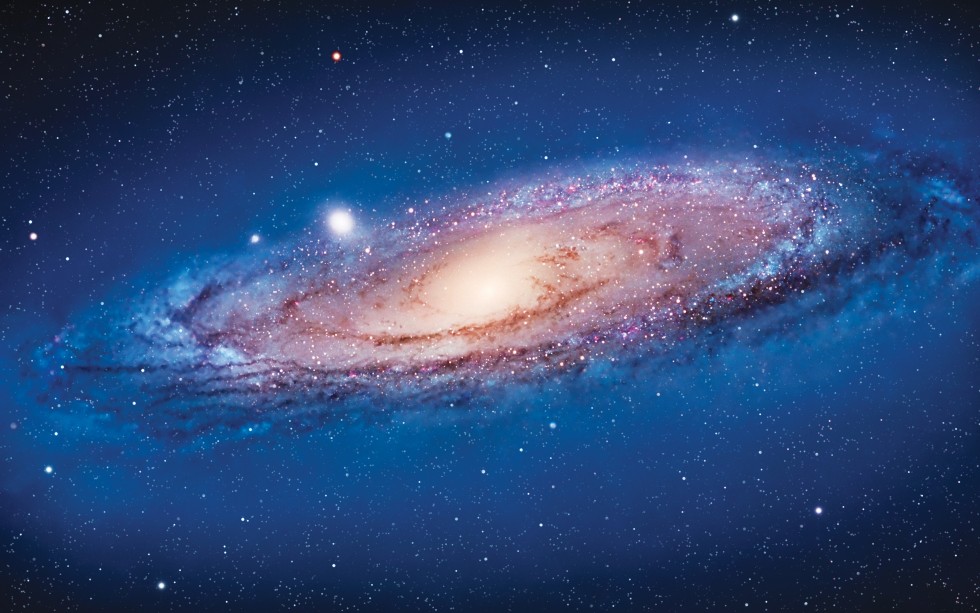
Astronomy may be the oldest natural science in the world. Before humans ever took to systematically studying the skies, we were craning our necks upwards, observing the curious movements of some bright points of light, and the stillness of others. Civilizations around the world have incorporated astronomical observations into everything from their architecture to their storytelling and while the pinnacle of the science is most commonly thought to have been during the Renaissance, it actually began a thousand years earlier and 5,000 miles to the East.
Around the 6th century AD, Europe entered what’s known as the Dark Ages. This period of time from around 500 AD until to the 13th century witnessed the suppression of intellectual thought and scholarship around the continent because it was seen as a conflict to the religious views of the church. During this time the written word became scarce, and research and observations went dormant.
While Europe was in an intellectual coma, the Islamic empire which stretched from Moorish Spain, to Egypt and even China, was entering their “Golden Age”. Astronomy was of particular interest to Islamic scholars in Iran and Iraq and until this time around 800 AD, the only astronomical textbook was Ptolemy’s Almagest, written around 100 AD in Greece. This venerable text is still used as the main reference for ancient astronomy in academia to this day. Muslim scholars waited 700 years for this fundamental Greek text to be translated into Arabic, and once it was, they got to work understanding its contents.
Astronomers like Ibn Yunus from Egypt found faults in Ptolemy’s calculations about the movements of the planets and their eccentricities. Ptolemy was trying to find an explanation for how these bodies orbited in the sky, including how the Earth moved within these parameters. Ptolemy calculated that the wobble of the Earth, or precession as we now know it, varied 1 degree every 100 years.
Later, astronomer Ibn Yunus found that Ptolemy was quite wrong and that in fact it was 1 degree every 70 years. However, they didn’t know that it was the Earth’s wobble causing this change because in the 10th century it was still believed that Earth was at the center of the universe. This discovery by Ibn Yunus and others like Ibn al-Shatir changed the landscape of astronomy forever. The heliocentric model eventually proposed by Copernicus in the 16th century was built on this body of work.
The math required for astronomy was also advanced in large part by Islamic scholars. They developed spherical trigonometry and algebra, two forms of math fundamental to precise calculations of the stars. Jamil Ragep, professor of Islamic studies at McGill University told Astronomy, “there were so many contributions over a millennium that it’s impossible to pick just a few.”
In the 8th century under Caliph al-Mamun al-Rashid, the first observatory was built in Baghdad and subsequent observatories were built around Iraq and Iran. Since this was before the telescope had been developed, the astronomers of the time invented observational sextants. These tools, some as large as 40 meters, were critical to the study of the angle of the sun, movement of the stars, and the understanding of the orbiting planets.
One of Islam’s most famous astronomers and scientific thinkers, Ibn al-Haytham, is known as “the father of optics” because he was the first person to crack the code about how we perceive light. He figured out that light traveled in a straight line into our eyes but not out. For hundreds of years it was thought by people like Ptolemy that our eyes actually emitted light, like an interior flashlight. His work developed the camera obscura and eventually aided in the development of the telescope.
The light from stars contain a history themselves; it’s taken tens of thousands of years in some cases for their story to travel through space and reach our eyes and mirrors of our telescopes. A millenia later, around 200 stars bear the Arabic names of astronomers who made significant contributions to the field. On the surface of the moon there are twenty four craters named after the Muslim astronomers who’ve paved the way for the modern science and astronomy.
Studying the cosmos is something more ingrained in the international culture than meets the eye. If you’ve ever stared at the belt of Orion or Alcor and Mizar, the binary stars in the Big Dipper, then you’ve gotten a small glimpse into the legacy created by Muslim scientists around the world.
Source: Muslimvillage





© islom.uz 2003-2026.
All rights reserved. When using the site materials reference is obligatory.
Email: admin@islom.uz
Telegram: @portalislomuzadmin_bot
Uzbekistan, Tashkent, 100185
Sogalli ota street, 5


