
What's so difficult about the Islamic calendar?
Imagine if for the months of September, October and December, one had to wait until the 29th night of the preceding month to know whether the start of the new month will be the next day or the one after. There would be non-stop controversies and chaos, right? And people would have demanded, and obtained, solutions to such a situation.
Well, that's essentially the situation that the Muslim world has been in for ages with regard to its religious months, particularly the holy months of Ramadan, Shawwal, and Dhul-Hijjah (the first being the month of fasting, the second being the month of feasting after Ramadan, and the last one being the month of pilgrimage to Mecca).
What's going on? The Islamic month is a lunar month, based on the phases of the moon, from new crescent to full moon and back to new crescent again. It has been the practice since the times (and simple injunctions) of Prophet Muhammad peace be upon him to start and end any month upon sighting the new crescent by naked eyes, since during those times (in the early seventh century CE), there were no optical aids. (We'll get to the status and role of the telescope in a short while.) And for religious purposes, that practice seemed fine for some time, as it allowed anyone anywhere to determine whether the new month, especially the crucial month of Ramadan when every adult (save for those who are exempted for one reason or another) is supposed to fast (during the whole month, from dawn to sunset.)
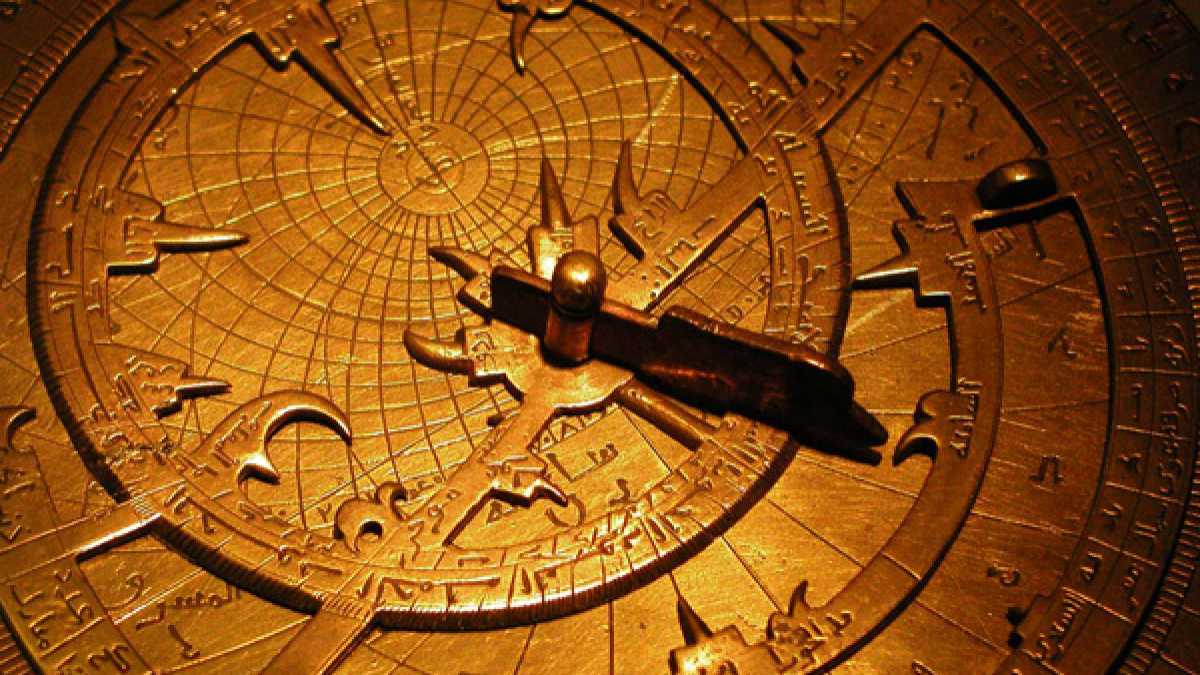
But quickly, the Islamic society turned into a real state and civilization, and people realized that months need to be structured into a calendar, which then serves many civil purposes in addition to the religious ones. At the same time, Muslims were coming into contact and becoming aware of the sciences that had been developed by other nations and cultures, including the astronomy of Indians, the Babylonians, and the Greeks. So the field of "Islamic Astronomy" quickly emerged to address such questions as the Islamic calendar, prayer timetables, and others. And soon an Islamic calendar was constructed by Muslim astronomers and was used by the rulers for various purposes, including the payment of salaries, the scheduling of various civil deadlines, etc.
But these calendars remained for "civil purposes" only, and for religious times (e.g. Ramadan), the practice of sighting the crescent on the 29th evening of the previous month remained in effect. And that did not create any chaos, for two reasons: a) due to the lack of fast communications and travel, societies remained largely local, and only travelers noticed discrepancies in dates of religious or civil occasions between different lands; b) economies were primitive and slow, and so one day off now and then did not wreck things significantly enough for anyone to protest.
Today the world has changed so much, and yet the practice has remained largely unchanged, leading to more chaos. Indeed, because different Muslim-majority countries follow different approaches and rules in determining when Ramadan (and other holy months) start, including the stronger or weaker reliance on astronomical knowledge, we routinely find the Muslim world celebrating the start or end of Ramadan on three or four different days.
Now, one of the difficulties lies in the fact that the Islamic month is based on the new crescent, not the "new moon" (the moment of passage of the moon between the earth and the sun). The latter is a purely astronomical moment, and it can be calculated with great precision, but the appearance of the thin new crescent (some 15 to 30 hours after "new moon") is rather complicated matter, as it also involves atmospheric and meteorological effects, not to mention the ability of the human eye, or of a telescope, to see a thin crescent. Still, astronomers have made huge progress on this problem and can now confidently predict in which regions of the world the crescent will be seen (by naked eye or with optical aid) on any given night.
It is astounding that a problem that science can today solve without disturbing the main religious principles underlying it could still constitute such a socio-economic predicament, entirely due to the religious authorities' reluctance to give up the old literalistic ways.





© islom.uz 2003-2026.
All rights reserved. When using the site materials reference is obligatory.
Email: admin@islom.uz
Telegram: @portalislomuzadmin_bot
Uzbekistan, Tashkent, 100185
Sogalli ota street, 5


